


New York City’s historic tenement buildings are famous for their small layouts, narrow air shafts, and dense immigrant populations. But one unusual feature occasionally found in older apartments, especially in neighborhoods like the Lower East Side and East Village, is the bathtub in the kitchen. In fact, The New York Times was just recently invited into musician Richard Hell’s East Village apartment that HAS a bathtub in the kitchen.
While this may seem strange today, it was actually the result of housing reforms, plumbing limitations, and evolving sanitation laws during the late 19th and early 20th centuries.
What Were Tenement Buildings?
Tenement buildings were multi-family apartment houses built to accommodate New York City’s rapidly growing immigrant population in the mid-1800s. These buildings were often constructed quickly and cheaply, resulting in cramped apartments and minimal sanitation infrastructure.
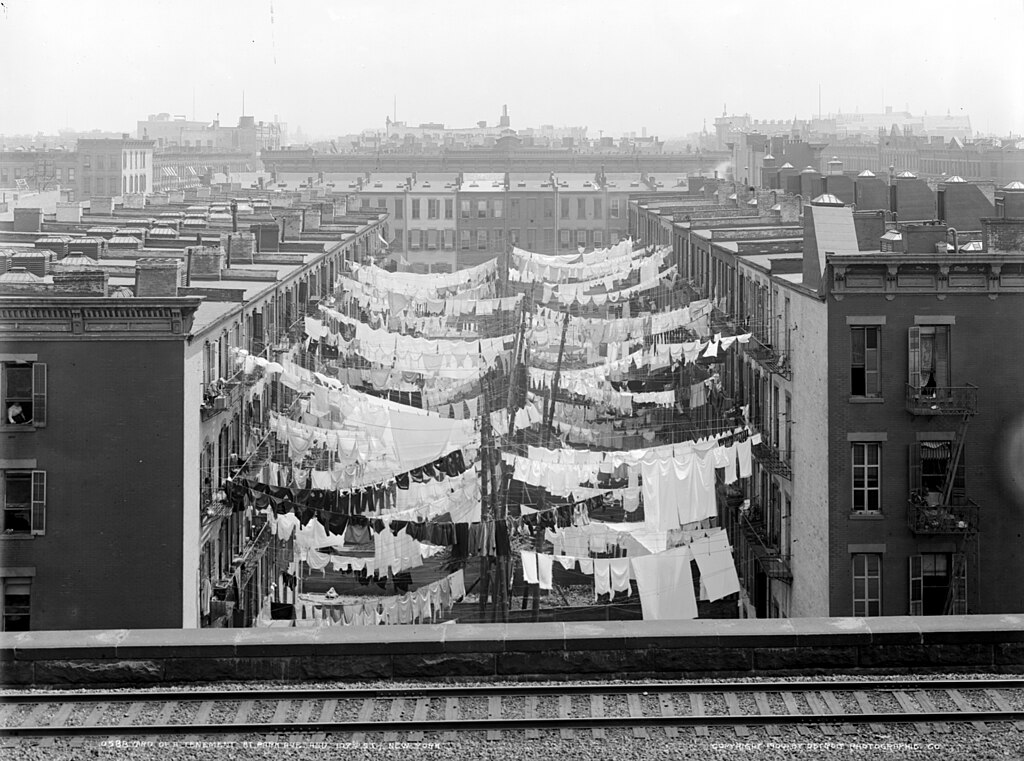
One well-known example is the building at 97 Orchard Street on the Lower East Side, which housed approximately 7,000 residents over a 70-year period beginning in 1863. Now, you can find fancy units in the area for a limited number or renters or buyers that reach above $3 million.
Apartments were typically small (often only a few rooms), and the kitchen served as the central space for cooking, working, sleeping, laundry, and bathing.
Early Tenement Apartments Had No Bathrooms
In many early tenements, apartments did not include private bathrooms or running water.
Residents often relied on:
- Shared backyard outhouses
- Hallway toilets used by multiple families
- Communal water pumps or spigots
Families frequently had to carry water up several flights of stairs to use for cooking, cleaning, and washing.
Because indoor plumbing was rare, bathing usually involved heating water on a stove and washing in a basin or portable tub inside the apartment.
Public Bathhouses Were Built for Tenement Residents
The lack of bathing facilities eventually became a major public health concern. Overcrowded housing and poor sanitation contributed to the spread of diseases in 19th-century New York.
To address this issue, the city and philanthropic organizations began constructing public bathhouses where residents could wash for a small fee.
For example, the Milbank Memorial Baths opened in 1904 to serve neighborhoods where tens of thousands of residents lacked bathing facilities in their homes.
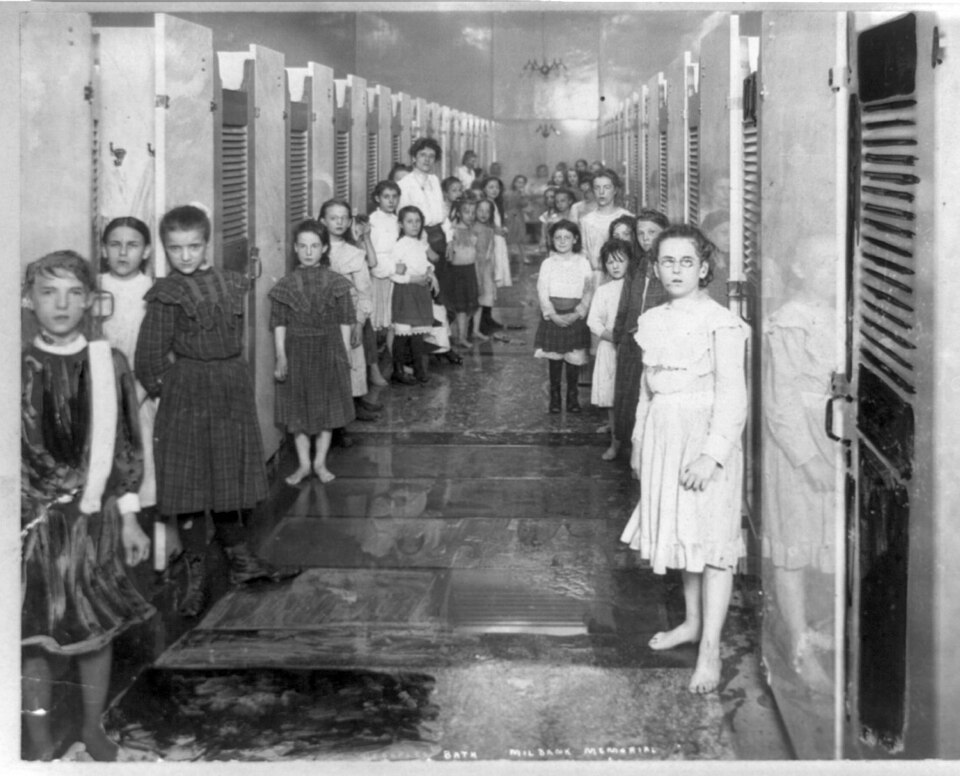
These bathhouses were an important early attempt to improve hygiene in crowded immigrant neighborhoods.
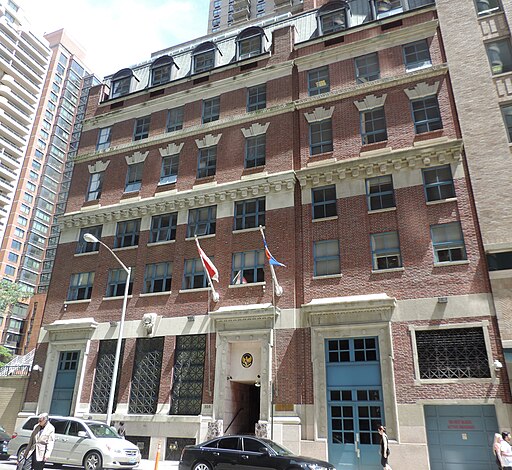
Housing Laws Changed Tenement Sanitation
Public concern about tenement living conditions eventually led to major housing reforms.
The three Tenement House Acts, passed between 1867 and 1901, introduced regulations aimed at improving safety and sanitation. These laws required improvements such as better ventilation, windows for interior rooms, and eventually indoor plumbing and toilets.
Later reforms required apartments to include sinks and bathtubs, forcing landlords to retrofit many older buildings.
Why Bathtubs Were Installed in Kitchens
When landlords updated older tenement buildings to comply with sanitation laws, they faced a major design challenge: most apartments had no room for a separate bathroom.
Learn more:
The kitchen already had plumbing connections for the sink, making it the easiest place to install a bathtub.
As a result:
- Bathtubs were often placed next to the kitchen sink
- Some tubs were filled using water diverted from the sink
- Wooden covers were sometimes used so the tub could double as counter space
These adaptations allowed landlords to comply with housing regulations without drastically redesigning the building layout.
Shared Bathrooms Were Still Common
Even after bathtubs were installed in apartments, toilets were often still shared.
Many tenement buildings had:
- One or two toilets per floor
- Facilities used by multiple families
- Bathrooms located in hallways rather than inside apartments
At 97 Orchard Street, later renovations added two toilets per floor, which still served numerous tenants.
Private bathrooms inside individual apartments only became standard later in the 20th century as buildings were modernized.
A Quirk That Reflects NYC Housing History
Today, most surviving tenement buildings have been renovated to include modern bathrooms. However, the occasional kitchen bathtub still found in older apartments reflects an important chapter in New York City housing history.
What may look like an odd architectural feature was actually a practical solution during a period when the city was rapidly evolving its building codes and sanitation standards.
These kitchen bathtubs remain a reminder of how millions of immigrant New Yorkers adapted to crowded living conditions while the city slowly improved housing regulations.